
Most people start looking because the bare concrete has started to dust, stain or flake, or because they want the garage to feel like part of the house rather than a storage shed. A properly prepared epoxy system seals the surface, makes oil and road grime easy to wipe up, and brightens the room. This page explains what a garage system involves, where it works well, where it has limits, and what to ask before you commit.
What a garage epoxy system actually includes
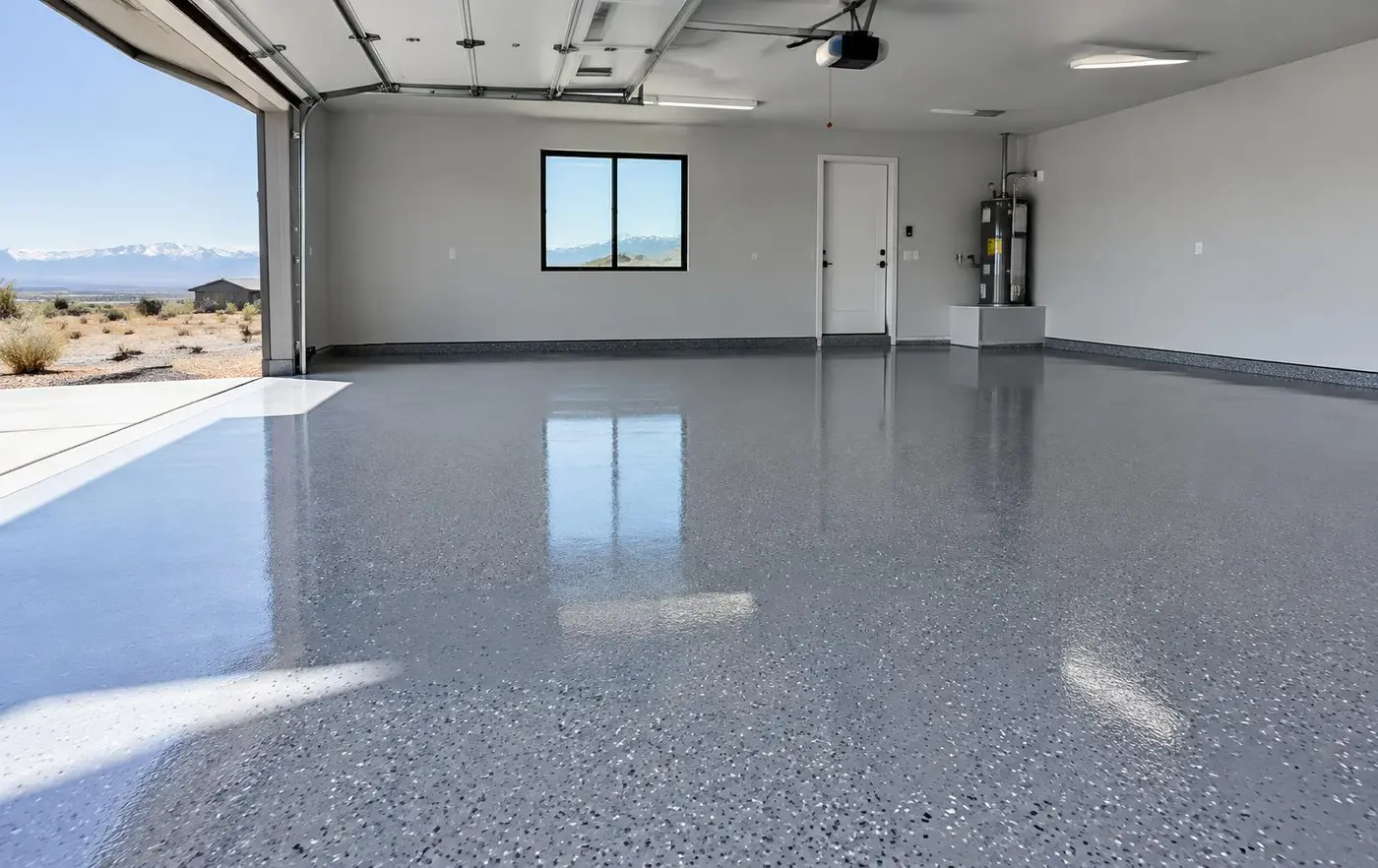
A durable garage floor is a system, not a single coat of paint. The work usually starts with mechanical preparation, typically diamond grinding, which opens the pores of the concrete so the primer can bond. Cracks, spalls and control joints are then filled or repaired. A pigmented epoxy base coat goes down next, often followed by decorative vinyl flakes and one or more clear topcoats.
Many installers now use a polyaspartic or polyurea topcoat over the epoxy base because it resists yellowing from sunlight better than many epoxies. If your garage door stays open on summer afternoons, ask which topcoat is proposed and why. Homeowners who prefer a solid color with no texture should ask about a light anti-slip additive in the topcoat; if you want the speckled look, see our flake epoxy flooring options.
- Diamond grinding or similar mechanical surface preparation
- Crack, pit and joint repair before coating
- Epoxy primer or base coat
- Optional decorative flake broadcast
- Clear, UV-resistant topcoat
Why Reno garages need careful preparation
Reno sits in the high desert at roughly 4,500 feet. Winters bring freezing nights, and the region often sees large swings between daytime and overnight temperatures. When you drive home in winter, your tires can carry in snowmelt, sand and road de-icers. Those chemicals sit on bare concrete and can contribute to surface scaling over time. A sealed, non-porous coating keeps that slush on top, where it can be squeegeed out.
The dry climate helps coatings cure, but low humidity and cold slabs can also shorten or lengthen working times. A good installer checks slab temperature and moisture before starting rather than following a fixed schedule. Strong high-altitude sun is another factor: west-facing garages that sit open in the afternoon benefit most from a UV-stable topcoat.
Where garage epoxy works best, and its limits
Epoxy is a strong choice for attached garages, home workshops and gym spaces. It is less forgiving on slabs with active moisture problems, heaving sections or large structural cracks. Those issues can cause coatings to blister or delaminate, and no topcoat fixes a moving slab.
Epoxy is also hard but not indestructible. Dropping heavy tools can chip it, and very cheap one-part kits from home centers are often thin enough to peel under hot tires. If your project is a shop, barn or detached building with heavier use, read about concrete floor coatings built for tougher conditions.
Serving garages beyond Reno
We also arrange garage projects in nearby communities. Homeowners in newer subdivisions north of Sparks can read about epoxy flooring in Spanish Springs, and anyone further south can review epoxy flooring in Carson City.
What affects the cost
We do not publish flat prices, because two garages of the same size can differ a lot in prep and repair work. These are the factors that move a quote:
- Square footage and the number of bays
- How much grinding, crack repair and patching the slab needs
- Existing coatings, paint or sealers that must be removed first
- Moisture test results and whether a moisture-mitigating primer is needed
- Solid color versus full or partial flake broadcast
- Topcoat type and the number of coats
- Stem walls, steps and cove details
Frequently asked questions
How long before I can park on a new garage floor?
It depends on the products used and slab temperature. Light foot traffic is often possible within a day, while vehicles usually wait longer. Ask the installer for the specific cure times of the system they propose.
Will hot tires lift the coating?
Hot-tire pickup is mostly a problem with thin coatings over poorly prepared concrete. Mechanical grinding and a professional-grade system greatly reduce the risk.
Can you coat over my old garage paint?
Usually not. Existing paint or sealer is normally ground off so the new coating bonds to bare concrete rather than to a layer that may already be failing.
Is an epoxy garage floor slippery when wet?
A smooth glossy finish can be slick with snowmelt on it. Flake broadcasts and anti-slip additives in the topcoat add texture that improves grip.
Can work be done in winter?
Often yes, as long as the slab and air temperatures are within the products' limits. Installers may use heaters or choose faster-curing materials during cold spells.